


Aya Mama Kitchen: The Taste of a Chinese Mother – How to Make Delicious Herbal Soup

Hi there! I’m Aya Mama. Today, I’m sharing a Chinese herbal soup recipe that my mother-in-law kindly taught me.
Chinese-style home cooking wouldn’t be complete without herbal soups. They’re incredibly nutritious and great for your health.
Even if you’re living in Japan, you can still make this dish if you can find the ingredients at Chinese grocery stores or online—so give it a try!
Ingredients
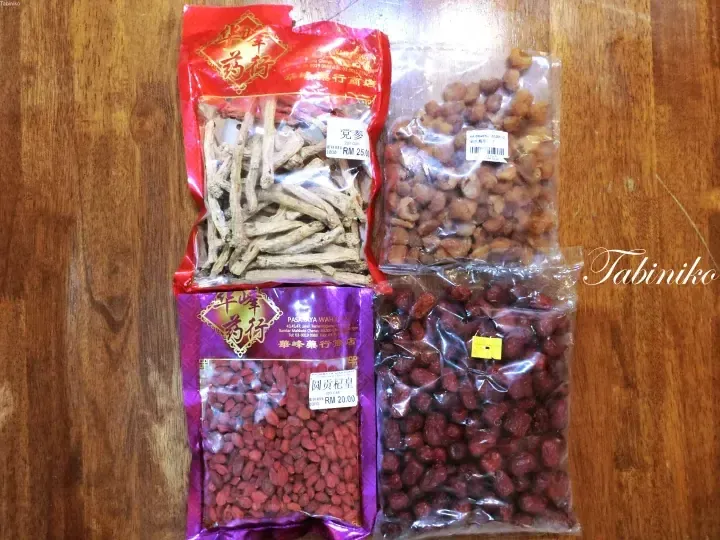
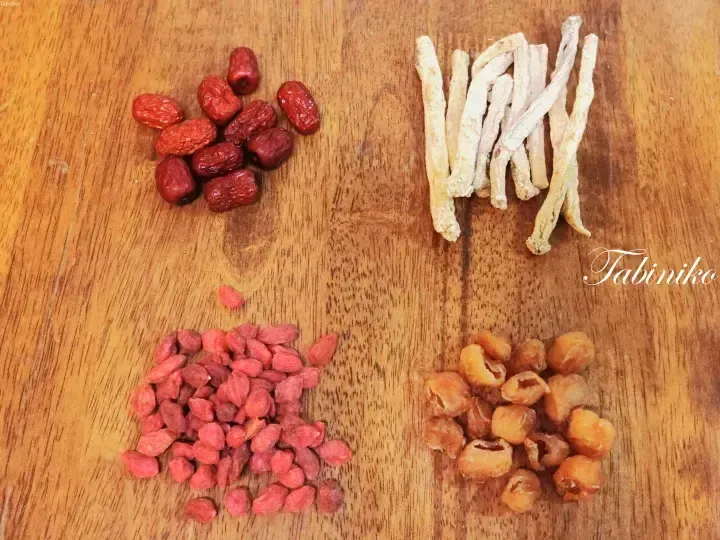
- Jujube
It’s said to be great for health and beauty, with benefits like preventing anemia, warming the body, calming effects, anti-aging care, and preventing constipation. My mother-in-law told me that women should drink jujube water about twice a week, so I drink it occasionally. I’ll also write a blog post on how to make jujube water.
- Goji berries
Rich in vitamins and known for its anti-aging effects, it also helps improve eyesight. My husband often soaks goji berries in hot water and lets them sit for a while before drinking the infusion. Highly recommended for anyone whose eyes get tired from staring at a computer screen!!
- Longan (also known as Longkong or dragon’s eye)
It’s called “lychee,” which means “dragon’s eye” in Chinese. It’s said to be effective against insomnia and fatigue.
- Tong Sang (Codonopsis Root)
It is said to invigorate Qi, moisten the throat, and activate both the spleen and lungs. It is commonly used to address deficiencies of Qi in the spleen and lungs, loss of appetite, fatigue, coughs and asthma, as well as deficiencies in Qi and blood, pale or bluish complexion, palpitations, and shortness of breath.
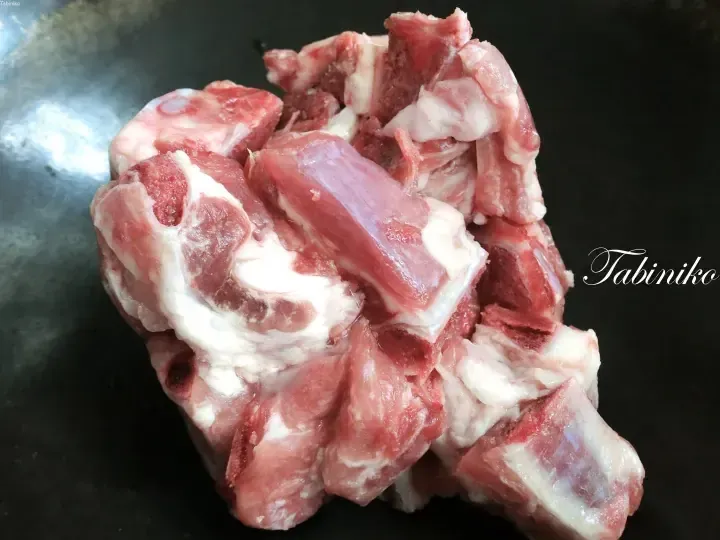
- Spare ribs
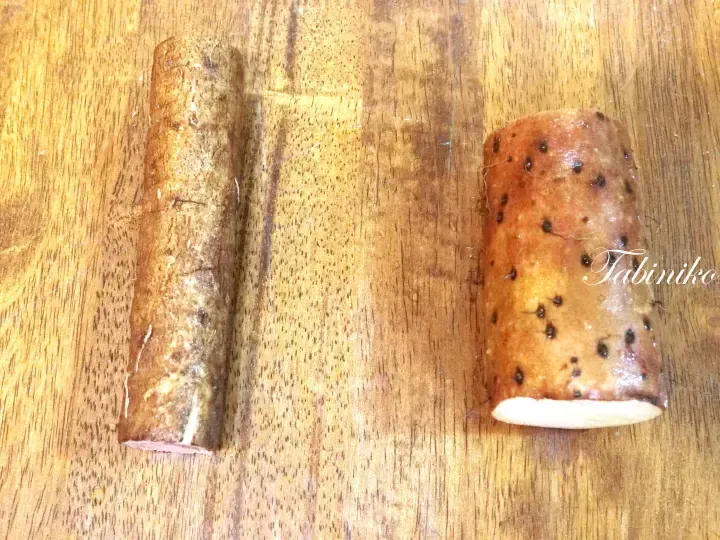
Yamaimo (add if you have it, but it’s optional)
Burdock root (optional, add if you have it)
How to make
Boil the frozen pork ribs in hot water to remove scum. You can also use fresh, unfrozen meat.
Once the meat changes color, remove it from the heat and transfer it to a bowl. Rinse the meat with water and gently wash away any scum or impurities clinging to it by hand. Removing the scum thoroughly will result in a much more flavorful soup.
Remove the pits from the jujubes.
Rinse the Chinese herbal medicine quickly with water. Be careful not to rinse them too much, as doing so will cause the herbal extracts to wash away. A quick rinse to remove any dust is sufficient.
Place the meat, Chinese herbs, yam, burdock root, and water (filling the slow cooker to about 90% capacity) into the slow cooker, then turn it on.
Simmer for 3 hours after bringing it to a boil. While you can do this in a regular pot without a slow cooker, the liquid tends to evaporate more quickly, so we recommend using a slow cooker for better results.
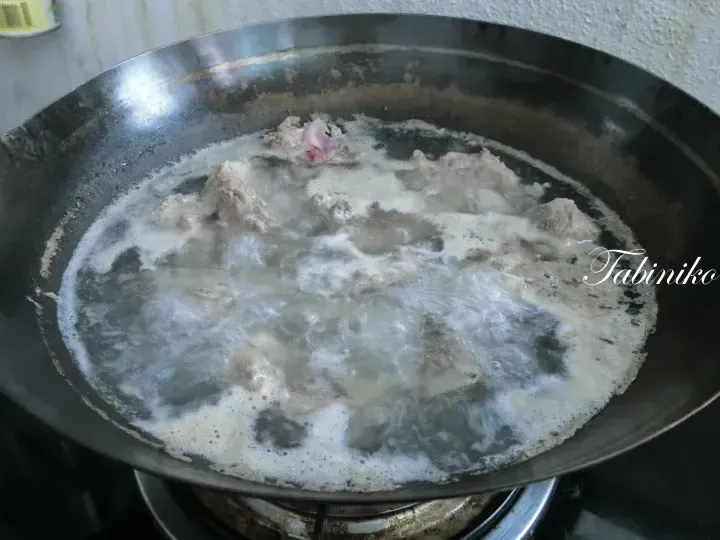
- Blanch the frozen pork ribs in hot water to remove impurities. You can also use fresh, unfrozen meat.
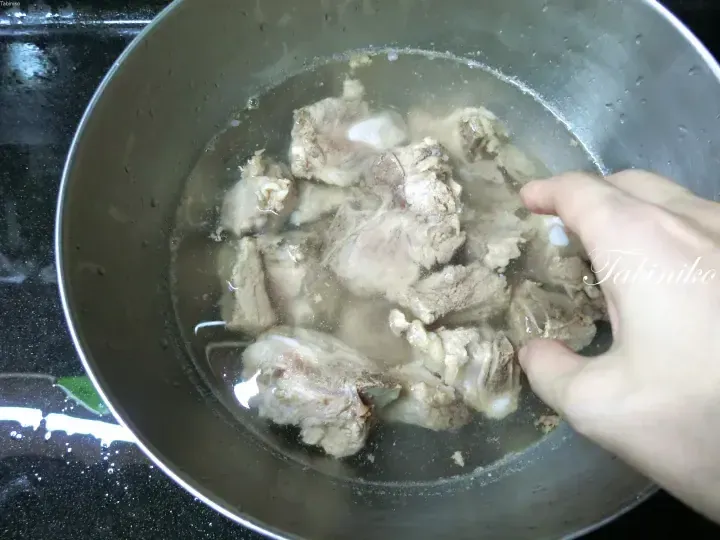
- Once the meat changes color, turn off the heat, transfer the meat to a bowl, and rinse it with water. Use your hands to carefully remove any scum clinging to the meat. Removing the scum thoroughly will result in a much more delicious soup.
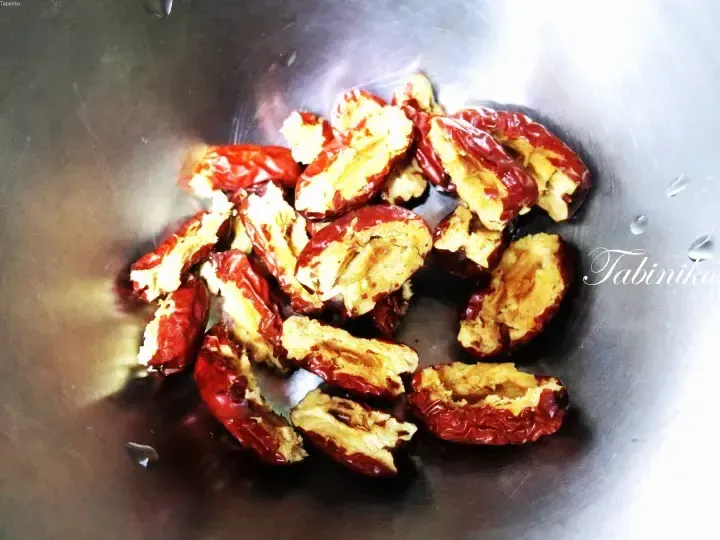
- Remove the pits from the dates.
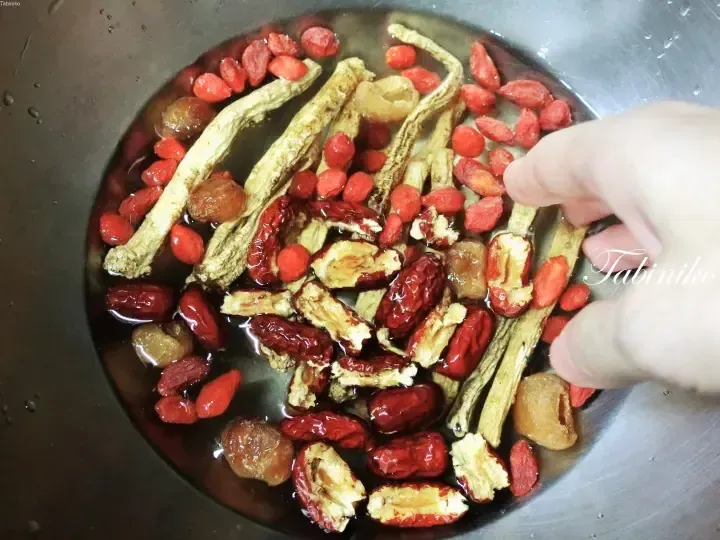
- Rinse the Chinese herbs quickly with water. Over-washing can cause the herbal extracts to leach out, so just give them a quick rinse to remove any dust or debris.
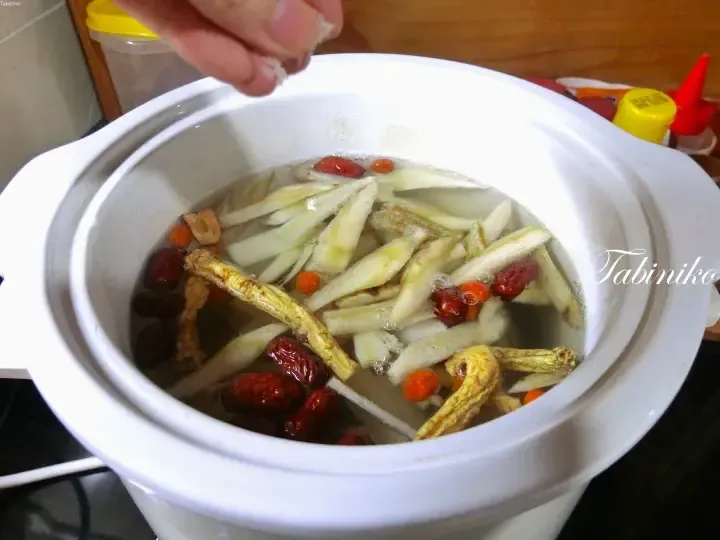
- Place the meat, Chinese herbs, yam, burdock root, water (fill the slow cooker to about 90%), and a pinch of salt into the slow cooker, then turn it on.
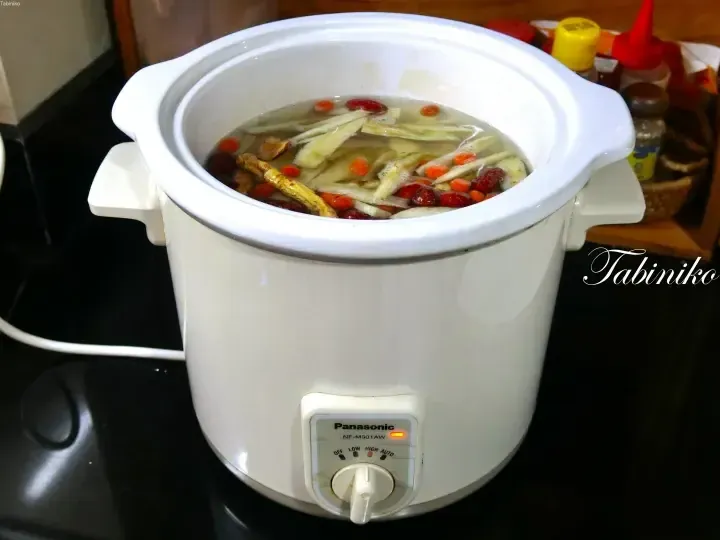
- Simmer for 3 hours after bringing it to a boil. While you can do this in a regular pot, the moisture tends to evaporate quickly, so a slow cooker is highly recommended for better results.
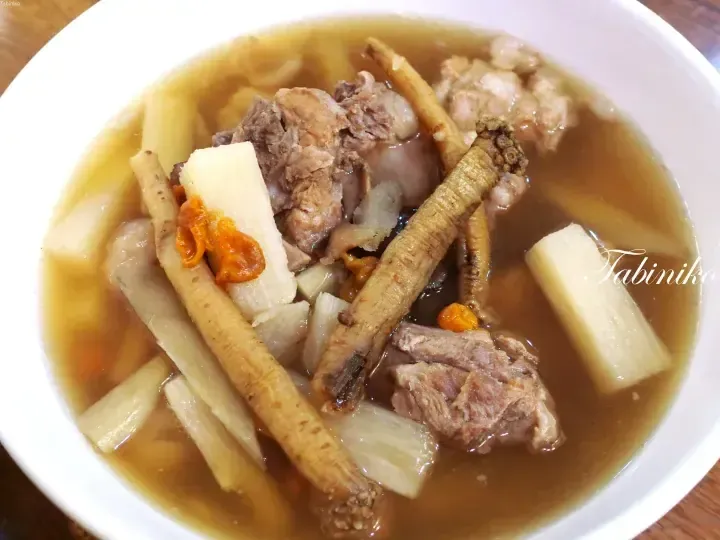
Done!!
It’s simmered with Chinese herbal medicine, so the meat becomes melt-in-your-mouth tender 😋😋 You can eat everything except the Dangshen (Codonopsis root). The soup is packed with nutrients, so make sure to drink it all! 😊👍

My son loves this soup so much that he even drinks his parents’ portions too! 😋💦 It’s a delicious herbal soup that’s also perfect for Japanese palates, so definitely give it a try!