
Aunty Aya👵🏻Blog 🥕Malaysian local supermarket🌶️
Hello. I’m Aunt Aya👵🏻This time I’ll introduce what I usually buy at the local supermarket I often go to! Even if you don’t buy expensive Japanese ingredients at a hypermarket, you can substitute local ingredients. If you shop wisely, you can save money and your life in Malaysia will be even more enjoyable 😊 Please use this as a reference for your shopping!
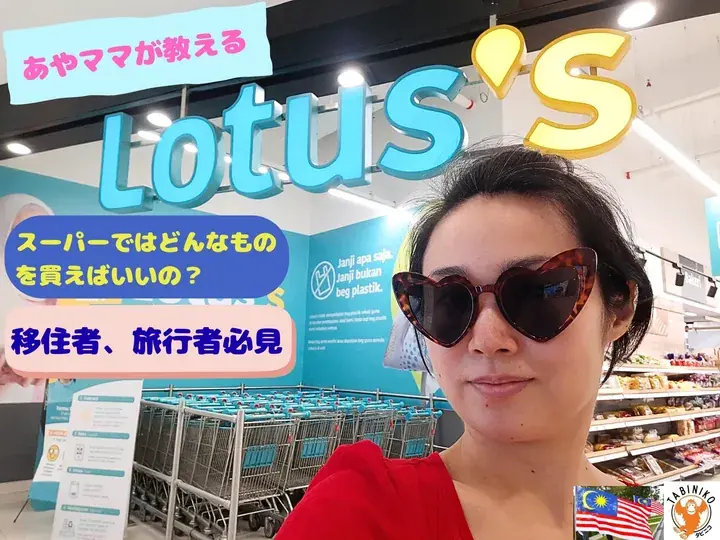
My favorite local supermarket, Lotus’s. This Lotus is everywhere in Malaysia. There are several types of shopping carts, and you can choose the cart according to the amount you want to buy.
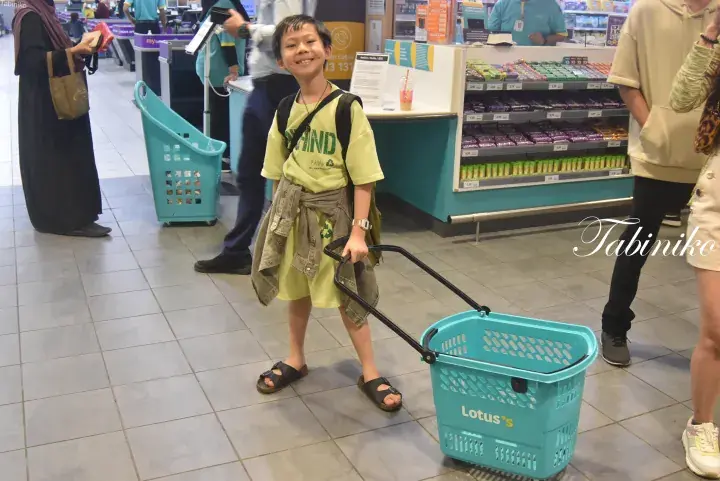
There is also a type that pulls a basket like this. The other day, a friend of mine who came from Japan said that this is a type that Japan doesn’t have and that it’s interesting. I’ve lived in Malaysia for eight years and my senses have become Malaysian, so this kind of basket-pulling type has become commonplace, but come to think of it, it’s not in Japan.
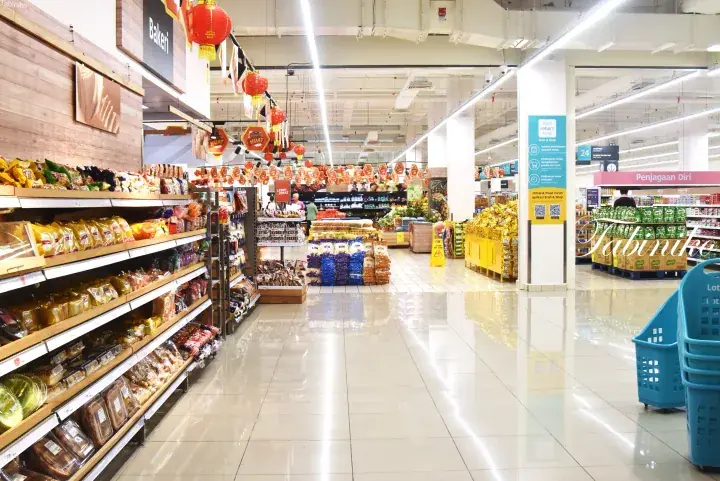
This is what it’s like inside the store. Larger than Japanese supermarkets! !
There is a bread corner as soon as you enter.
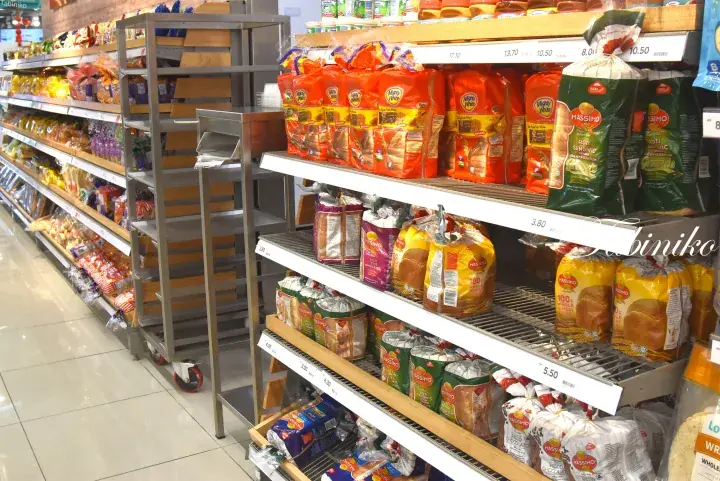
There are many kinds of bread, but the bread I always eat is MASSIMO ROTI SANDWIC. The one in the dark green package on the upper right of the photo.
I tried various things, but is this whole grain? It’s delicious and it’s just like that. There are other types of bread that contain whole grains, but they tend to have a strong smell, so I spread jam on this bread and eat it for breakfast every day.
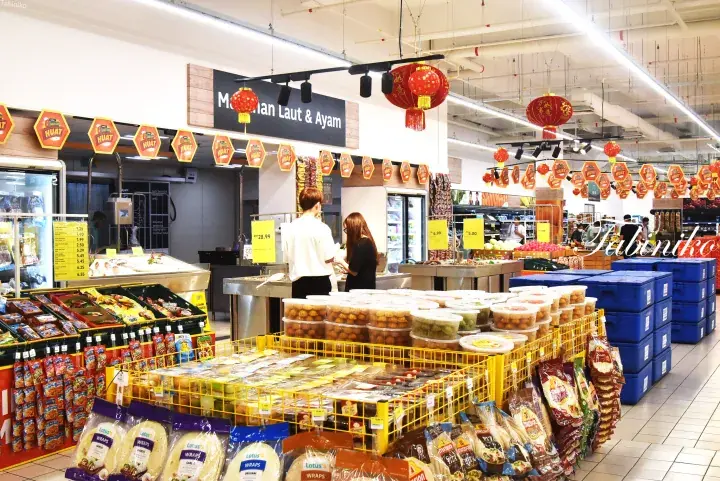
This is the meat and fish corner. Local supermarkets are halal (pork and alcohol are basically not available), so chicken is the main meat. We also have some beef and mutton. This store has a small non-halal (canned pork, alcohol) section in another location, but the variety is small.
But I don’t buy meat or fish at the local supermarket. You can buy chicken at a chicken specialty store or Pasa (morning market), and pork at a pork specialty store or Pasa. Next time, I will write a shopping blog for chicken, pork, and other items that are not sold at local supermarkets (^▽^)
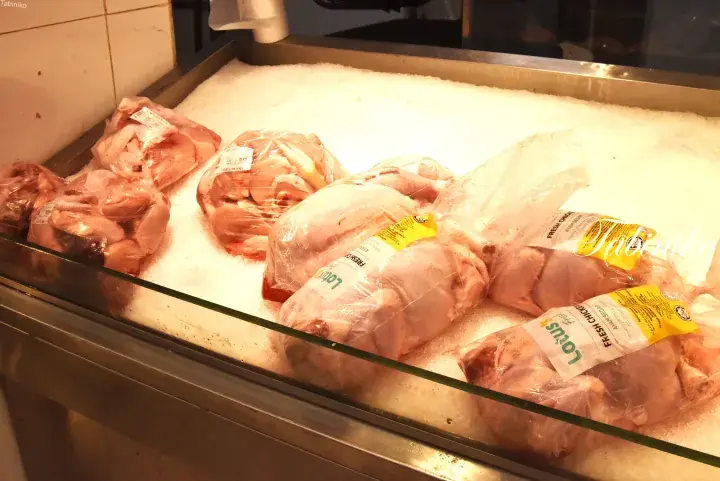
We sell whole chicken. Lotus’s are packed individually, but some stores sell them without bags. It was a shock at first (;^ω^) There aren’t many shops in Japan that sell whole chicken.
If you tell the person in charge of cutting when you buy it, they will cut it into small pieces as a service.
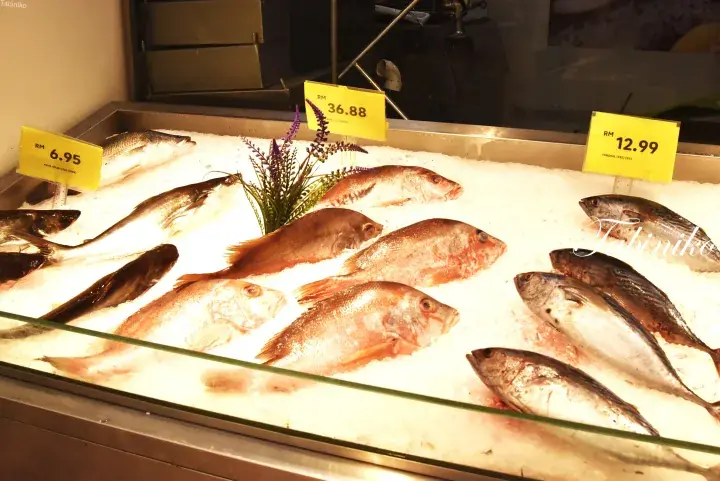
If you tell the person in charge of cutting the fish, they will remove the internal organs and scales. But they don’t do it as well as the Japanese do, so there are still places where it’s hard to remove the scales. I’ll have to pick it up myself later.
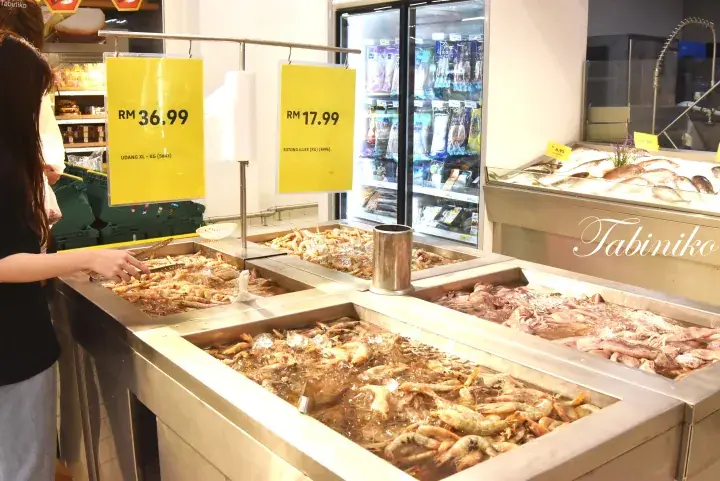
We also sell shrimp and squid. Put the items you want to buy in a plastic bag yourself (one plastic bag for each type) and have them measure the weight.
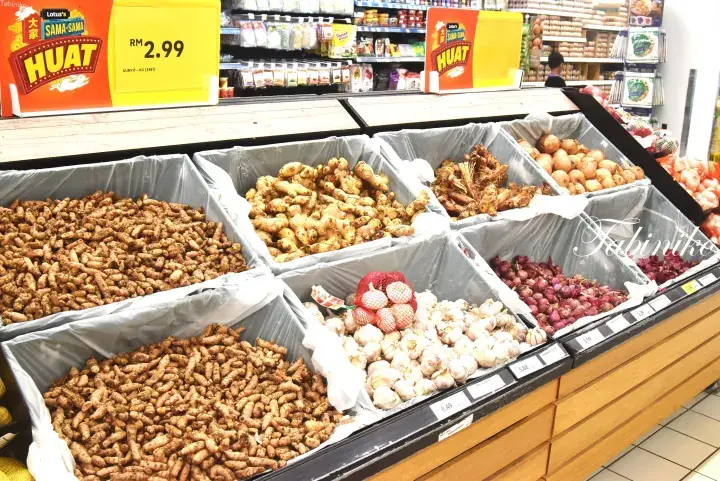
If the vegetables are not in a bag, put them in a plastic bag and ask them to weigh it. Japanese supermarkets sell them in bags, but Malaysia basically has a system where you pick and put them in bags. It takes time, but some of them are rotten, so it’s better to choose yourself even if it takes a little time.
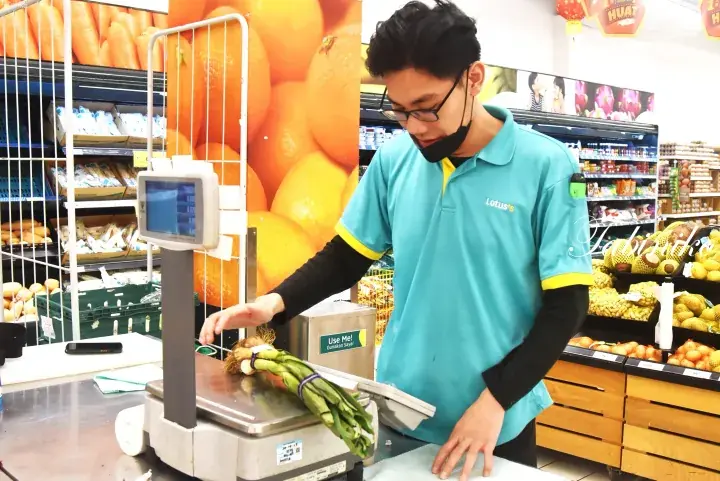
Here, I will have my brother measure the weight and put a price tag on it.
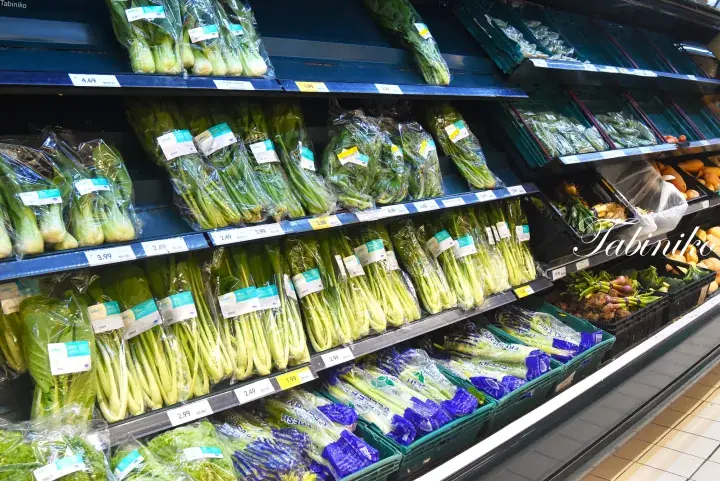
The leaves are sold in plastic bags in the refrigerator.
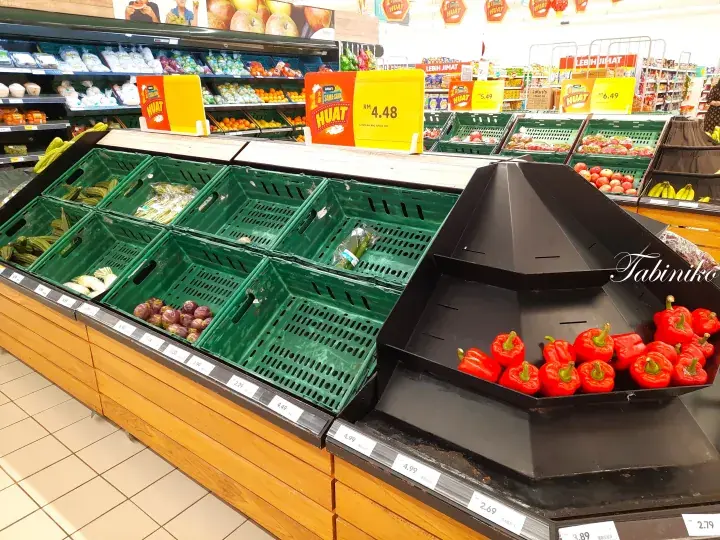
Sometimes there are no products at all. But really rarely. It’s unthinkable in Japan, but Malaysia is a laid-back country, so it can’t be helped. I was unlucky. I have no choice but to start over again. If you go to Japanese supermarkets in the morning, you can buy all kinds of fresh vegetables, but in Malaysian supermarkets, it is almost impossible to find all fresh vegetables.
The supermarket here opens at 10:00 in the morning, but even if you go there right after it opens, there are no new products on display. So I always go around 12 o’clock when it would have been a little displayed. At this time, there is a high possibility that fresh vegetables are on display, so you can buy fresh vegetables before others buy them, and the cash register is empty.
The introduction has become quite long, but I will introduce what I buy at the local supermarket.
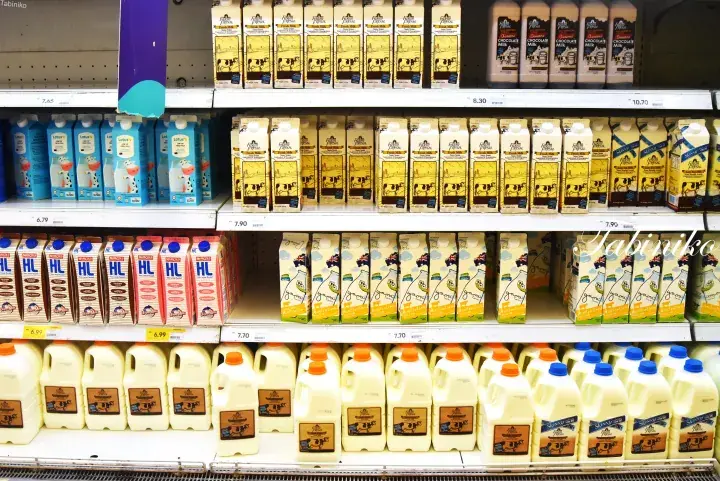
Milk should be FARM FRESH or imported from AUSTRALIA. I think all immigrants have experienced it, but Malaysia’s cheap milk is sweet. It’s surprisingly sweet. Not only immigrants from Japan, but also people from Australia were surprised at how sweet the milk was. Malaysians like sweet things, but I had no idea milk could be so sweet.
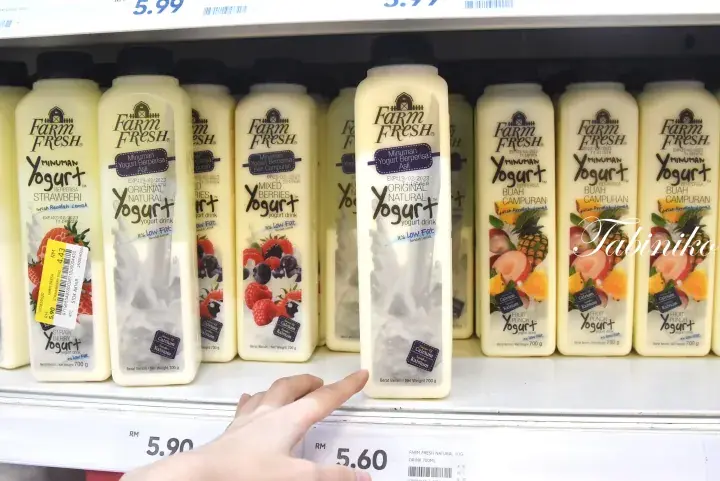
I always have this yogurt milk? And I’m drinking normal milk 1: 1. This alone is a little sour, and all Japanese people say that regular yogurt is sour. I want to eat bread and a little yogurt in the morning, so I drink this FARM FRESH Yogurt and milk in a 1:1 ratio so that it doesn’t taste sour. FARM FRESH Yogurt has other flavors, but I don’t really like it, so I drink ORIGINAL NATURAL every morning.
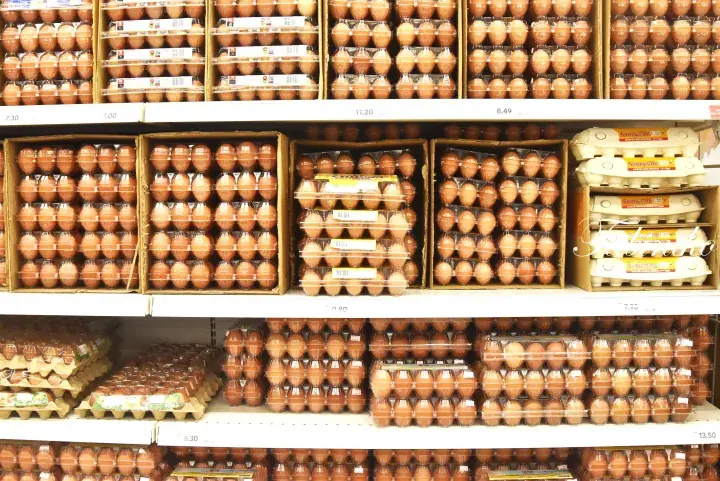
Malaysia has an amazing amount of eggs! ! ! I don’t think Japan has such a large variety and quantity of eggs. Among them, the egg I always eat is this ↓ ↓ ↓
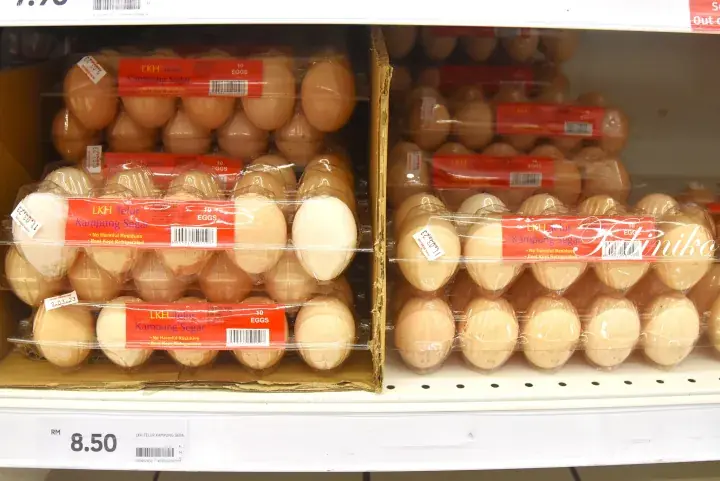
Telur Kampung. Telur is the Malay word for egg, and Kampung is the Malay word for “countryside”.
It’s a little more expensive than other eggs, but I always buy this because it’s from chickens that are raised differently. It used to be RM7.5, but Malaysia has recently gone up in prices, so eggs have become more expensive. . .
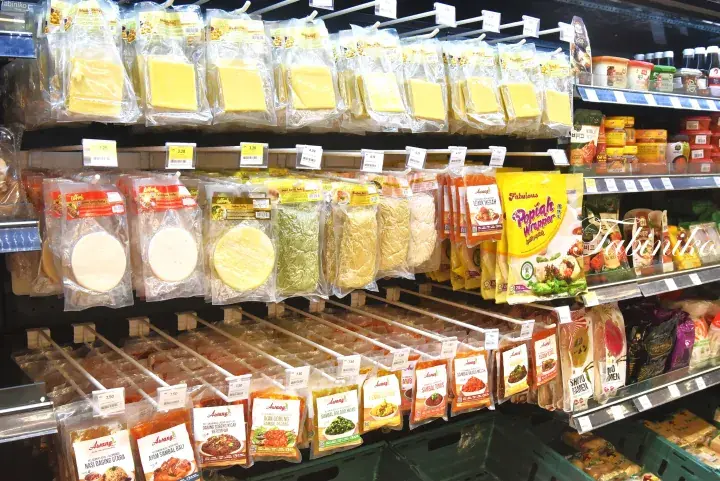
We also sell dumpling skins (for boiled and fried dumplings), wonton skins, and raw noodles. I buy it occasionally.
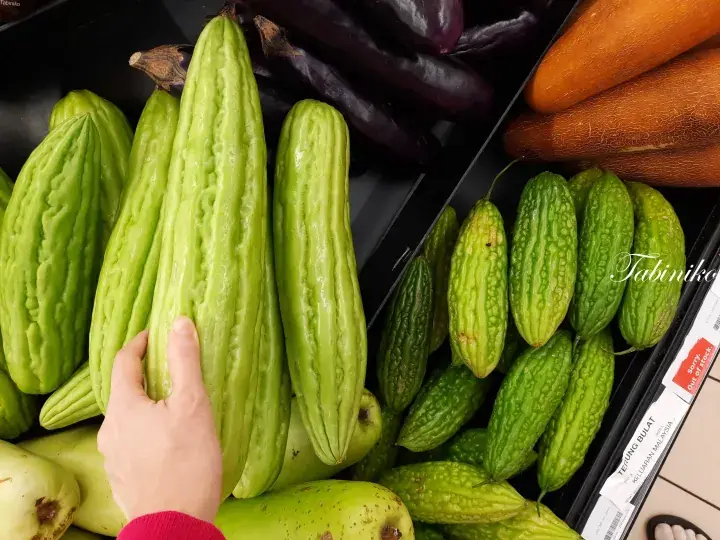
Malaysia’s standard bitter gourd is the yellow-green one on the left. The small bitter gourd on the right is very bitter 😱 I wrote a blog about bitter gourd before, so please take a look. → Malaysian Bitter Gourd 🥒🥒🥒
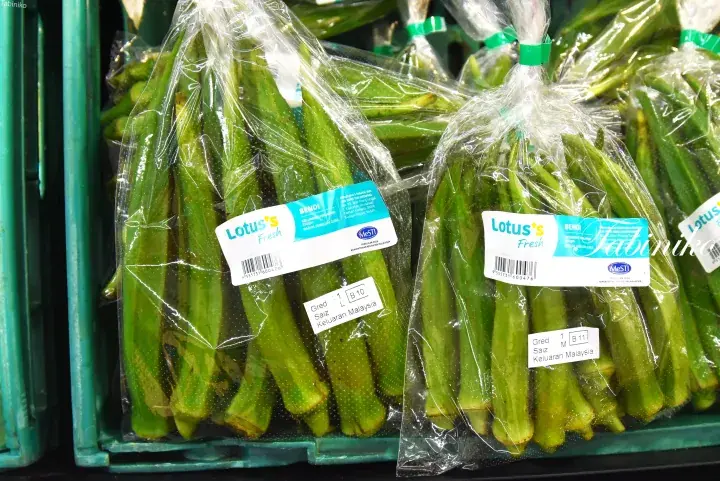
This is okra. Larger than the Japanese ones. If it is too big, it will be hard and inedible (there are also hard and inedible ones on sale… you have to decide for yourself), so try to choose the smallest size possible. On this day, the okra on the left is large, so I bought the smaller one on the right.
I basically buy vegetables at supermarkets, but they don’t have burdock roots, yams, lotus roots, etc., so I buy them at other greengrocers or Pasa (morning market).
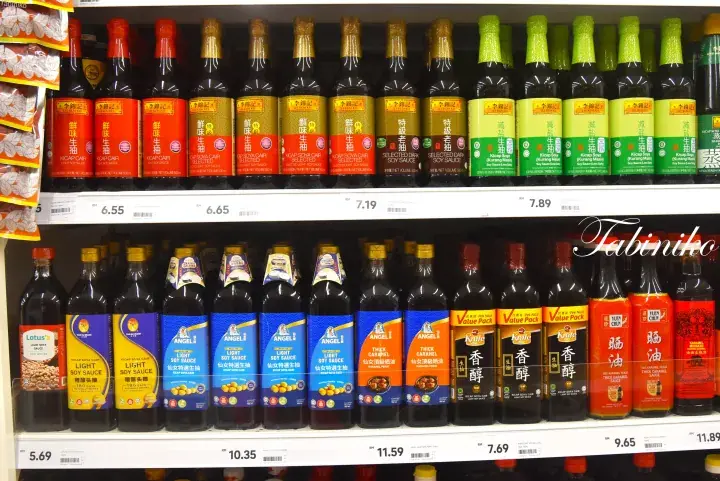
For the soy sauce, I use the blue label LIGHT SOY SAUCE Fairy Tokusen Seiryu in the bottom left of the photo above. I use it when making stir-fries and seasoning meat. I haven’t tried all of them, but Malaysian soy sauce is basically sweet.
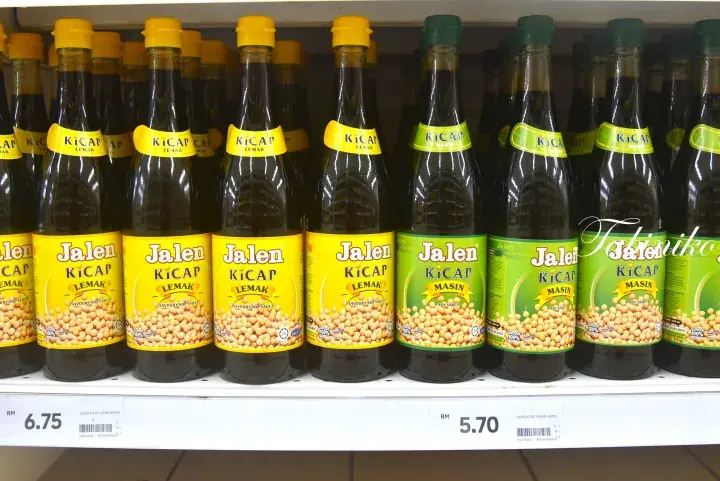
This is the soy sauce used by Malays. MASIN on the right means salty in Malay, but from my point of view as a Japanese person, it’s not salty. But if you add a little salt to it and mix it, it will taste like Worcestershire sauce, so when you make the sauce for the hamburgers, add a little salt to make it look like Worcestershire sauce, then mix it with ketchup.
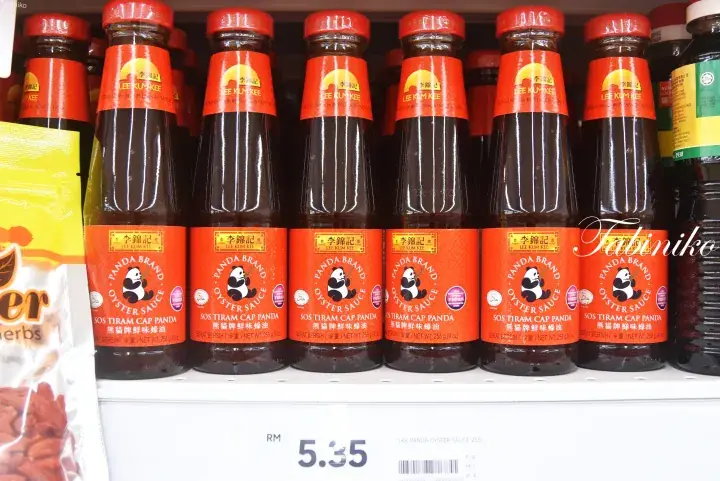
Oyster sauce is definitely decided by Lee Kum Kee! A long time ago, an old lady at a supermarket said that Lee Kum Kee’s oyster sauce is rich and delicious. The cheap ones have little taste. He said.
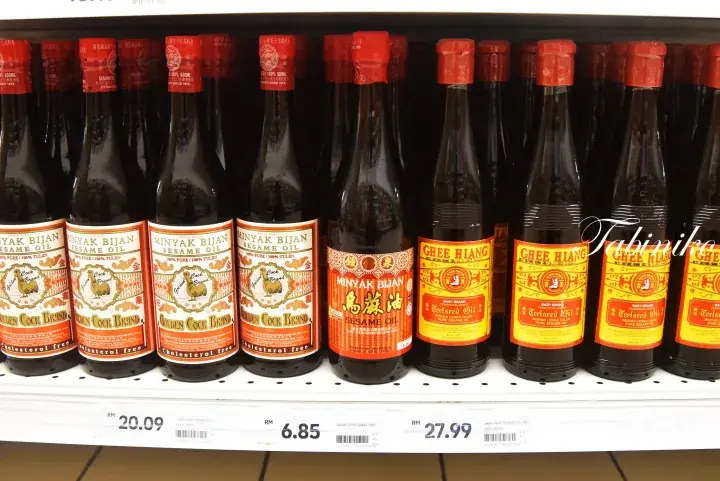
As for sesame oil, GHEE HIANG on the right is fragrant and delicious. A long time ago, when I was looking at sesame oil at a certain supermarket, a Hong Konger who was traveling said that GHEE HIANG was fragrant and delicious! ! I bought it by looking at some site, so I’ve been buying this since then. The fragrant smell of sesame oil drifts from the moment you open the lid. It’s expensive and delicious!
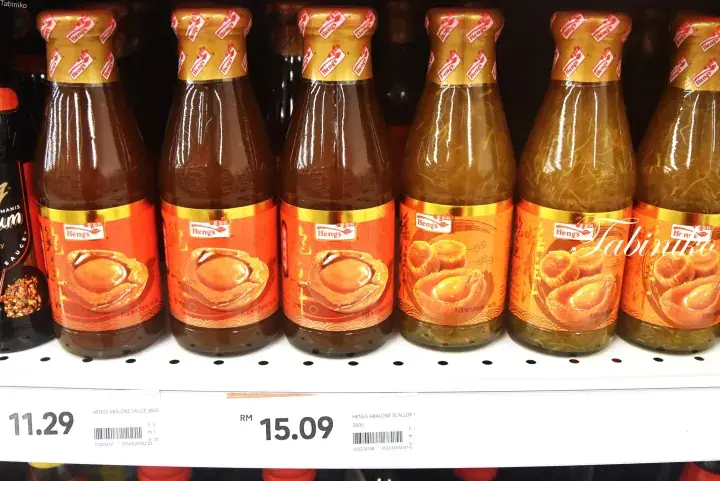
This is a seasoning that Erik’s brother’s wife taught me. When you’re busy, after making stir-fried food, add a little bit of this and mix it before turning off the heat, and you’ll have a delicious stir-fry (#^.^#) Recommended seasoning for busy people.
Left is abalone taste and right is scallop taste. I tried both to season stir fry! Scallops are more expensive, but I can’t tell the difference in taste, so I always buy the cheaper one.
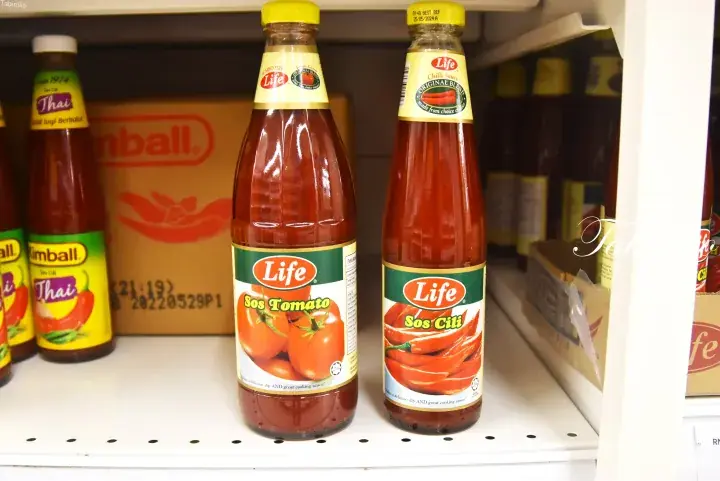
When I make pasta, I always use the tomato sauce on the left, but tomato sauce with chili is also sold on a nearby shelf, so it’s easy to get it wrong. . . Japan doesn’t sell tomato sauce with chili in it.
A little while ago, I made tomato sauce-flavored pasta and ate it, and it was salty-sweet. I accidentally bought tomato sauce with chili in it. I didn’t notice until I made it (laughs) Everyone please be careful (>_<)
The tomato sauce on the left is also quite sweeter than the Japanese one.
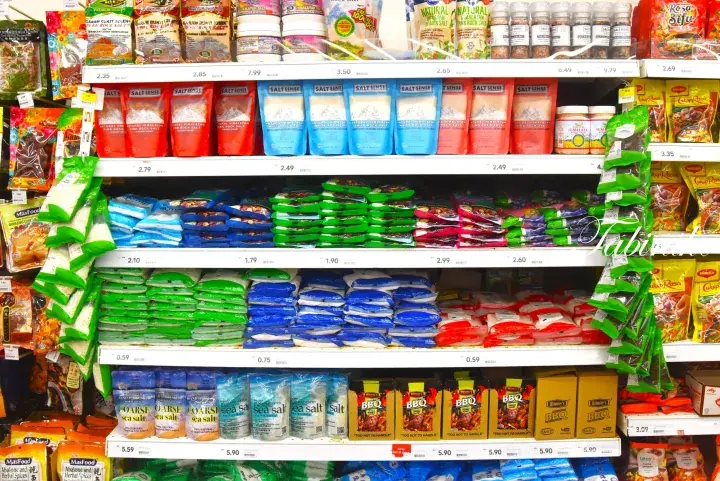
This is a salt shelf. It’s amazing how many different types of salt there are!
This is the salt I always buy ↓ ↓ ↓
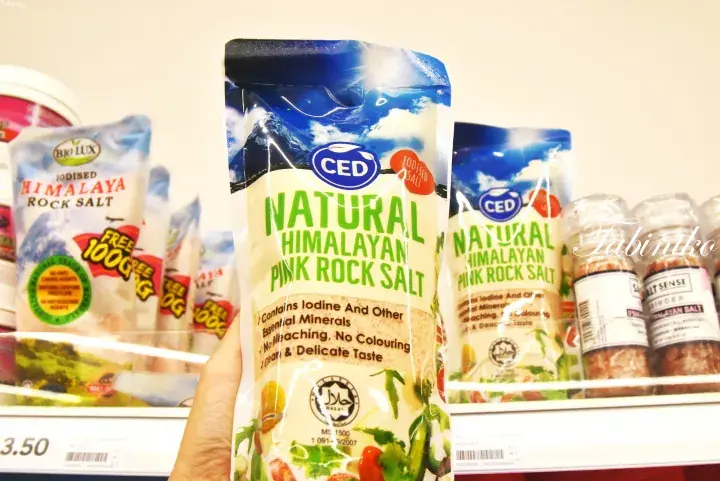
NATURAL HIMALAYAN PINK ROCK SALT RM2.65 500G Super cheap! ! It’s cheap and good for souvenirs.
This is also a souvenir that Hong Kongers often buy to take home.
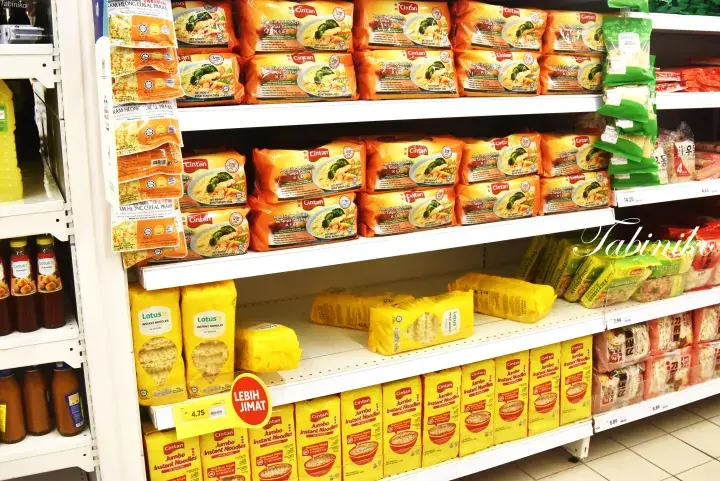
When I make instant noodles occasionally, I use Cintan’s Non Fried Noodles. The noodles on the photo. I use Cintan’s Non Fried Noodles because the bottom noodle is very greasy. But even Non Fried Noodles use some fat. Noodles are also sold at stores that specialize in dried foods that I often go to, so I’ll introduce them next time!
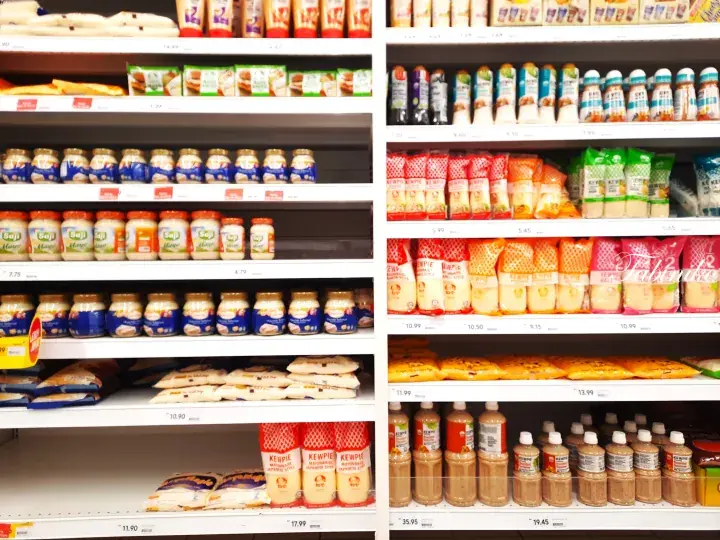
Mayonnaise. The mayonnaise on the left is used by locals (I think Malays probably use it. Chinese people don’t use mayonnaise) and it’s sweet. I never imagined that mayonnaise could be sweet, so I was as surprised as I was with milk. I always buy the pink kewpie half on the right.
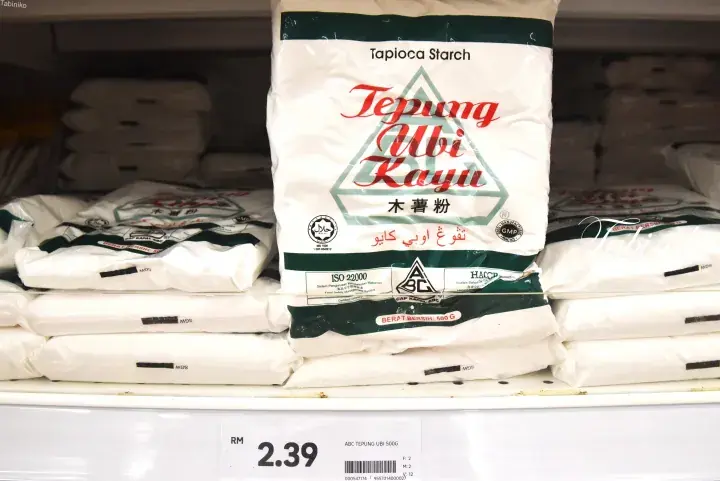
This is Malaysian potato starch. You don’t need to buy expensive Japanese potato starch. I always use this potato starch. In addition to cooking, when a small child has a mild diaper rash, it can be cured by dissolving it in water with a lot of potato starch and applying it to the skin. My son also got rid of diaper rash with this potato starch. This is what I learned from my highly respected Chinese medicine teacher.
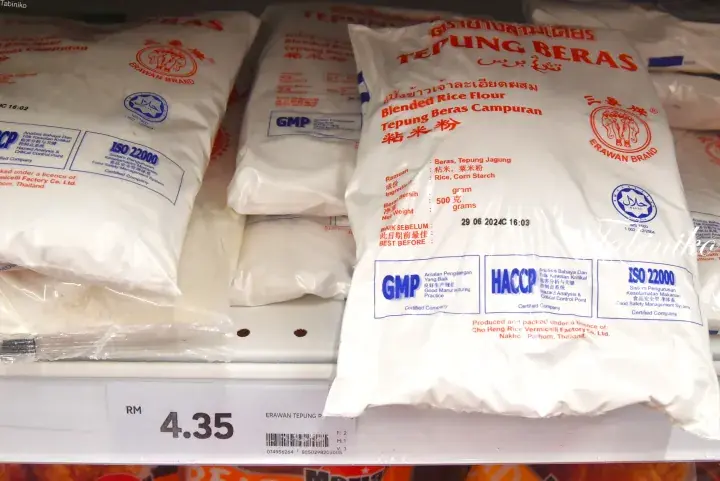
Sticky rice flour is joshin flour.
This Lotus’s only has sticky rice flour, but they also have glutinous rice flour. Glutinous rice flour is shiratama flour.
Chinese people have a habit of eating shiratama dumpling soup on the winter solstice, so this is what we use when making it.
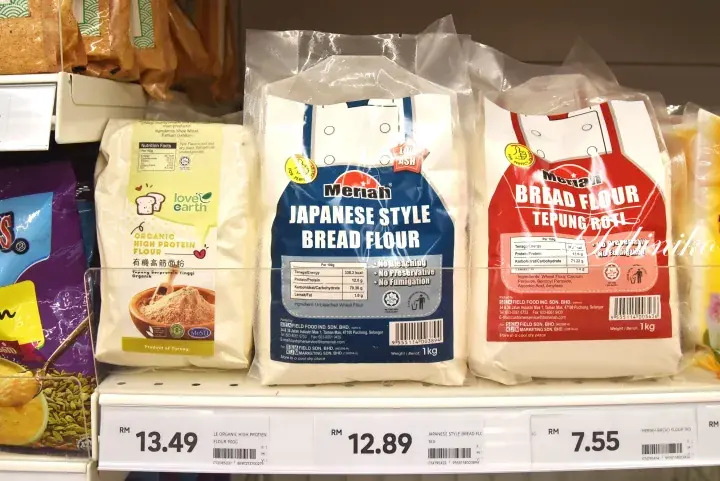
We also sell strong flour and flour for making bread. I came to see it recently. The left is organic strong flour.
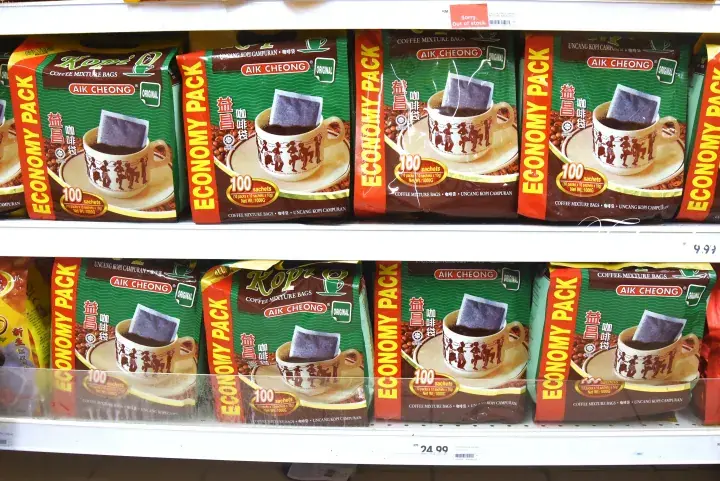
AIK CHEONG is the coffee recommended by the Chinese medicine teacher. It doesn’t contain many additives. Eric loves coffee, so he drinks this all the time.
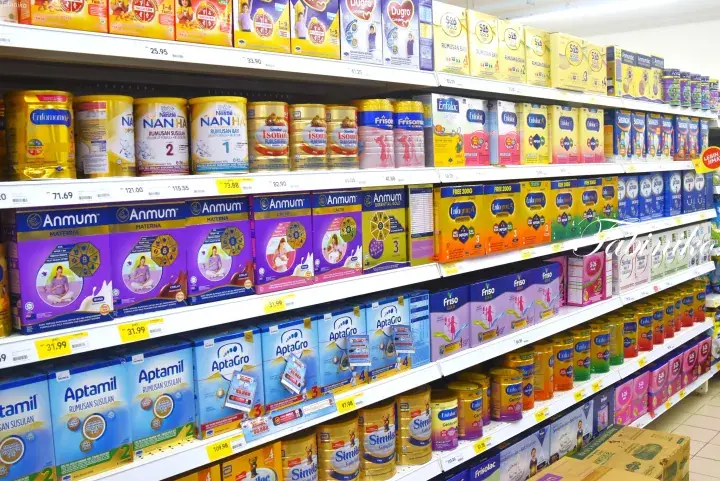
There are many different types of baby formula and milk you can drink during pregnancy. My son is now 3 and a half years old, and he is drinking Frisono formula recommended by the principal of the nursery school (the one in the purple package in the lower right corner of the photo). Japanese children seem to drink powdered milk only until about 1 year old, but Malaysian children are drinking powdered milk even for fairly large children (7-year-old child of the principal of a nursery school). It’s for immunity.
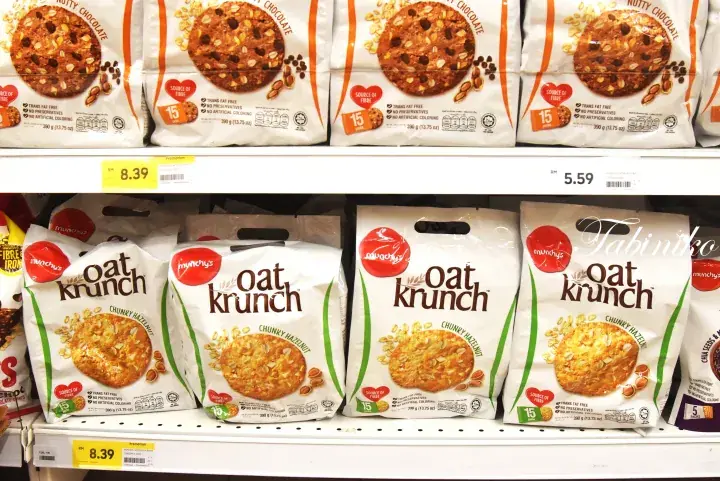
I eat this in the morning when I don’t have time or when I’m hungry. It contains oats and is packed one by one, so it doesn’t need to be damp.
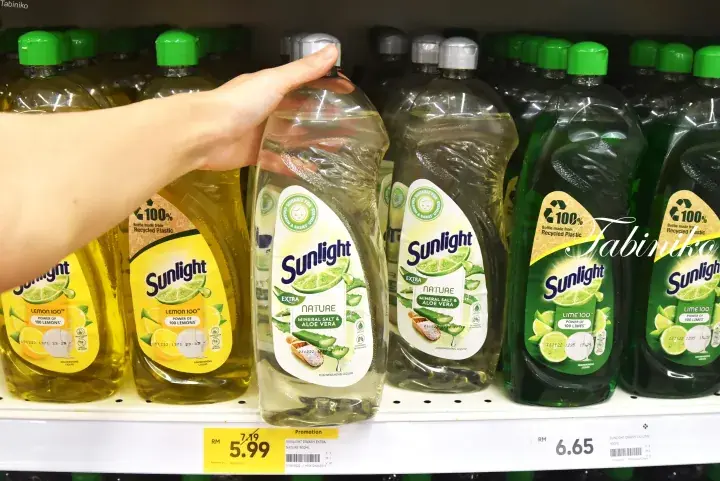
For detergents, I recommend Sunlight’s NATURE for kids and babies. I always wash all adult dishes with this detergent. Eric’s friend told me. This product is popular and often out of stock. . . So it’s better to buy stock at some point. This has no expiration date, so I have about 4 in stock. There are times when the price is lower due to promotions, but it’s usually not the case (;^ω^)
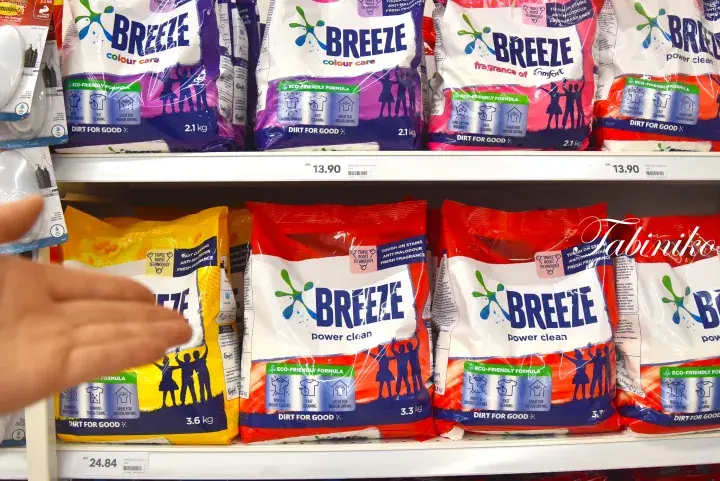
I don’t know which detergent is better, but Erik’s brother’s family uses it, so we use it too. I’ve tried a lot of laundry detergents, but I feel like the ones that are too cheap don’t have enough cleaning power, so I started using this one. There are some Japanese people who use high-attack laundry, but the water is not as clean as in Japan, so even if you use a strong laundry detergent, the whitish things will gradually turn yellow. So I think this is enough. In Malaysia, not many people wear white clothes. Maybe that’s why. I no longer wear them either.
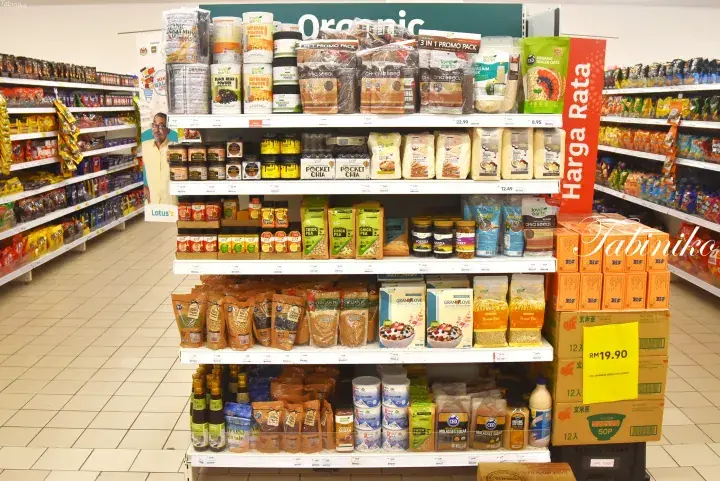
There are also many organic products for sale.
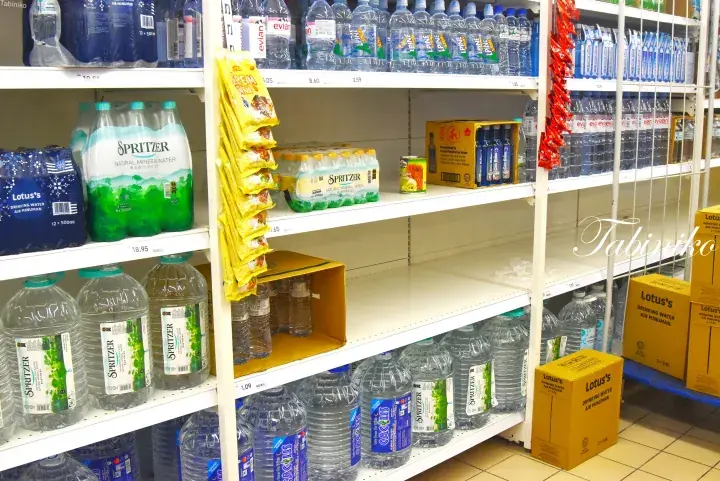
In Malaysia, there are sudden water outages, so I always stock up on 6L large plastic bottles of water.
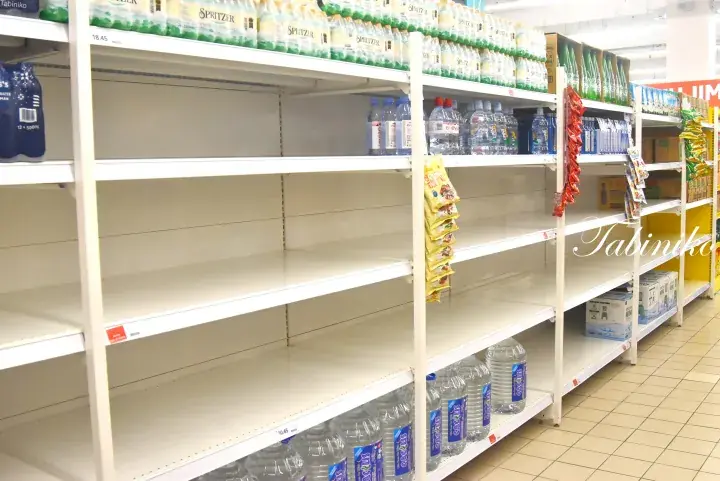
As you can see in the photo above, there are times when there is not enough water, so be sure to buy stock when it is in stock! ! Sometimes there are none at all. Other than water, there are often no products available. . . It can’t be helped because it’s Malaysia. . .
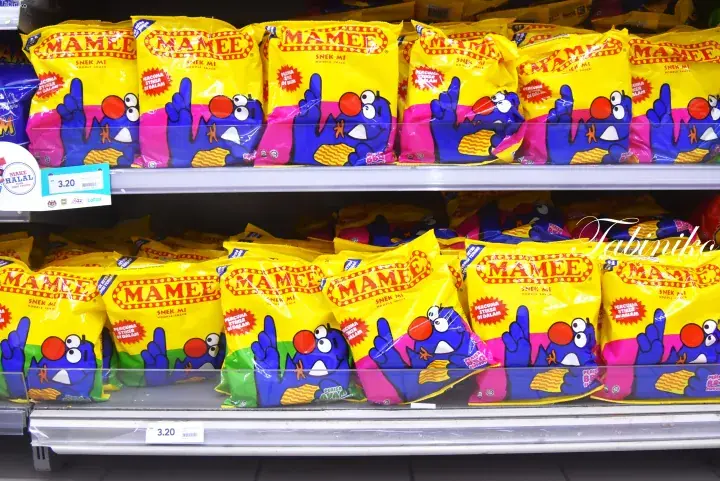
This snack is delicious, so I recommend giving it as a souvenir when you return to your home country.
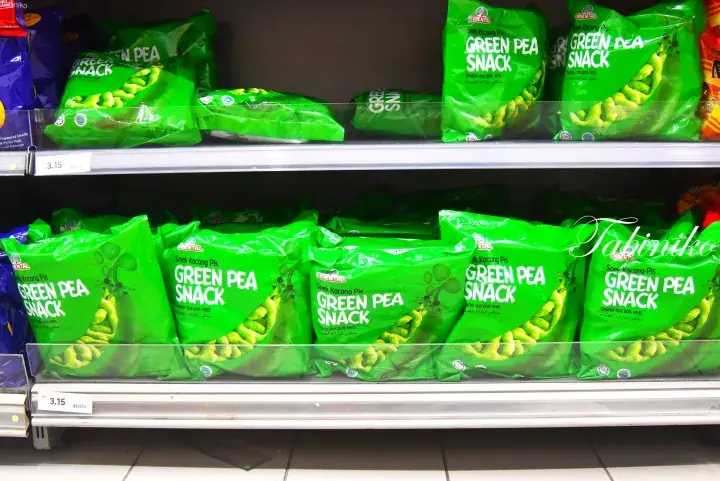
This snack is also delicious, so I recommend it as a gift to throw around when you return home~(^▽^)
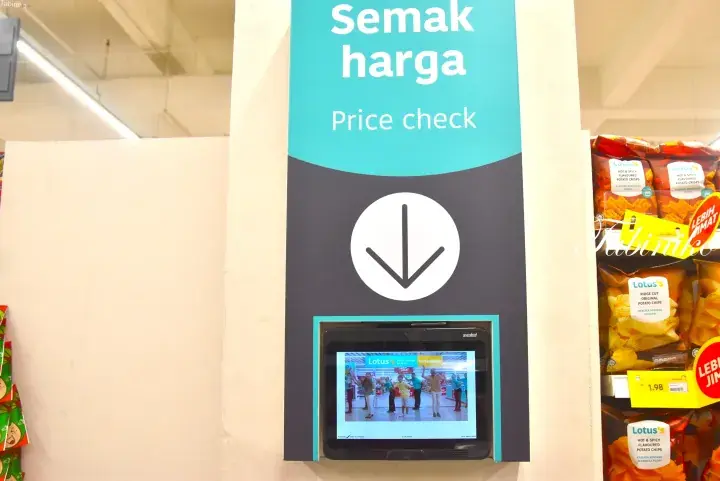
There are price tags on the shelves where the products are placed, but often the price is wrong, or the promotional price tag is still there even after the promotion period has ended (if you don’t notice it, you can find the normal price at the cash register). ), if you are not sure about the price, check the price with this price check machine. Even in promotions, check the period on the price tag before putting it in the basket.
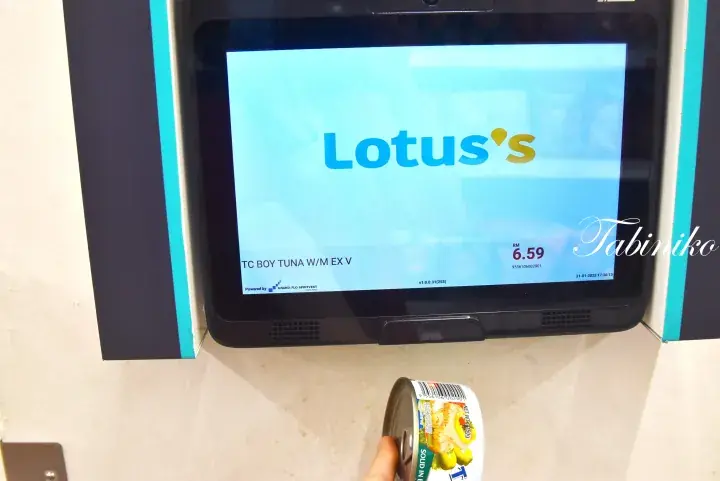
If you hit the bar code on the red lamp, the price will be displayed.
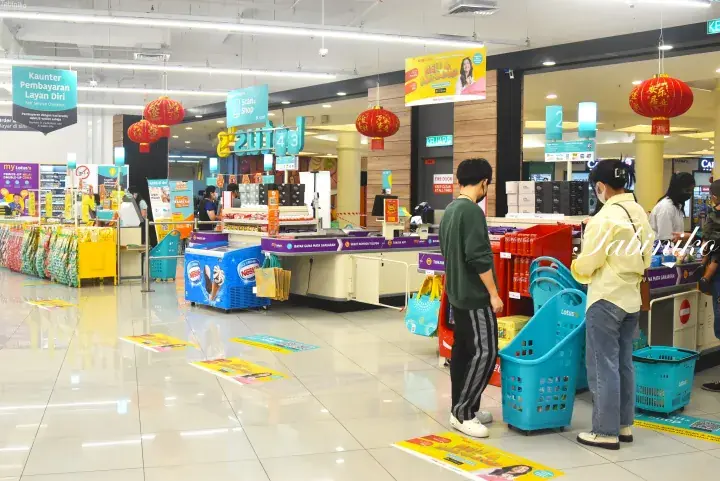
The cash register on the right side of the photo is a cash register with a clerk. There is always a line. The left side of the photo is the self-service cash register.
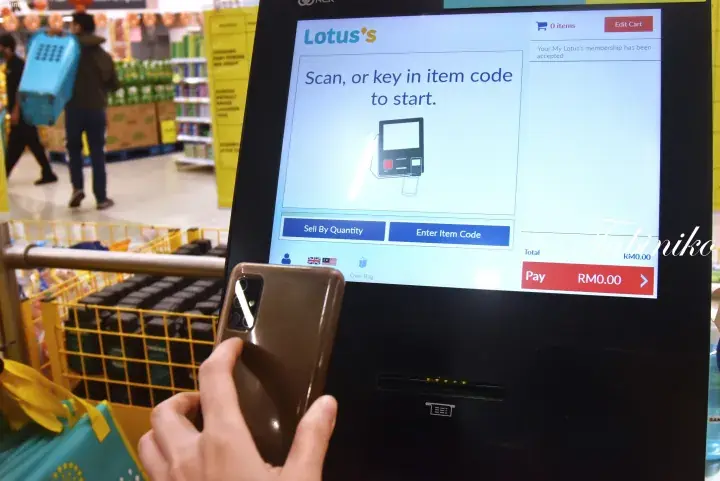
Self-service cashiers scan barcodes and fill bags themselves. I always use this cash register because I can check the price here and it’s empty. If the price is higher than you expected and you want to cancel it, there is a store clerk nearby who is watching over you, so if you ask that person, they will cancel it for you.
This time it was shopping at a local supermarket in Malaysia. Next time, I will introduce the local stores where I shop.
See you soon~👋🏻👋🏻👋🏻